Circus Animal Watercolor Cliparts: Whimsy for Modern Projects
There’s a particular challenge in design that often goes unspoken: how do you inject genuine warmth and personality into a project without sacrificing professionalism? We’ve all seen the overused stock images and the sterile, generic graphics that fail to make an impression. This is where a resource like the Circus Animal Watercolor Cliparts collection (U00143) steps in, offering a solution that is both visually distinctive and surprisingly versatile. It’s not just a set of cute images; it’s a toolkit for storytelling.
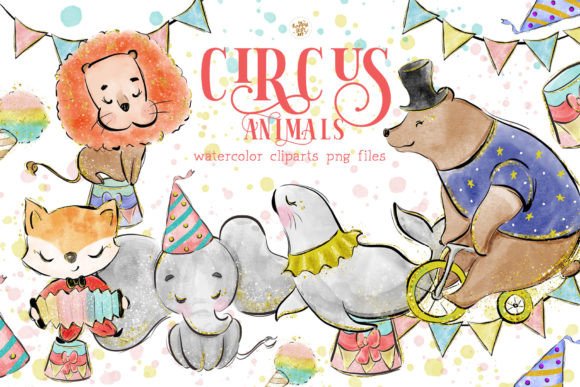
At its core, this collection presents 20 individual PNG files, each rendered in a soft, organic watercolor style. The subjects are classic circus performers—think lions, elephants, seals, bears, and monkeys—each with a friendly, approachable expression. The watercolor technique is key here. It avoids the harsh lines and flat colors of typical digital illustration, instead offering subtle color bleeds, textured washes, and a hand-painted feel that conveys authenticity and charm. The files are saved at 300 DPI, making them suitable for both digital and print applications, with the largest pieces at approximately 7”x7” and others scaling down to 7”x3.5”.
Where This Style Truly Shines
The appeal of these circus animal watercolor cliparts lies in their ability to bridge the gap between playful and polished. They are ideal for projects targeting families, children’s brands, educational content, or any business that wants to communicate joy, creativity, and a touch of nostalgia. Consider their application across different mediums.
For brand identity, these illustrations can become the cornerstone of a logo or a brand mascot for a children’s boutique, a party supply store, or a family-friendly café. The watercolor style lends a handmade, artisanal quality that can elevate a brand’s perception, suggesting care and uniqueness. In packaging design, a single clipart of a balancing bear or a trumpet-playing elephant can serve as a captivating focal point on a box or label, immediately setting a product apart on a crowded shelf.
Digital applications are equally compelling. In web design, these assets can break up text-heavy pages, serve as engaging section dividers, or add personality to an “About Us” page. For social media graphics, they are perfect for creating eye-catching Instagram stories, Facebook posts, or Pinterest pins that stand out in a fast-scrolling feed. The inherent cuteness and movement in the illustrations naturally draw the eye and encourage engagement.
Practical Integration and Design Strategy
Using a creative font or clipart set effectively requires more than just dropping it into a document. It’s about strategic integration. First, consider the visual hierarchy. These illustrations are inherently detailed and colorful, so they work best when paired with clean, simple typography. A sans serif font like Montserrat or Lato for body text provides a calm, readable foundation, allowing the watercolor art to pop without creating visual chaos. For headings, a complementary script font or a rounded display font can echo the playful energy of the animals.
When evaluating fit, ask yourself: does the project’s tone align with whimsy and warmth? A corporate law firm’s annual report might not be the right audience, but a bakery’s menu, a child’s birthday invitation, or a blog about creative parenting would be perfect. The key is to ensure the brand identity you’re building or supporting has room for this level of charm.
Practical testing is crucial. Before finalizing, place the clipart into your layout at its intended size. Check how it interacts with your color palette—watercolors have soft edges, so they can blend well or clash depending on the background. Because monitor displays vary, as noted in the product description, it’s wise to print a proof if the final output is physical. The commercial licensing for such assets is typically straightforward for small business use, but always verify the terms to ensure your intended application, especially for mass-produced merchandise, is covered.
Beyond the Obvious: Unexpected Uses
While the immediate connection is to children’s themes, a creative professional can push the boundaries. Imagine these cute circus illustrations used in a sophisticated way within editorial design—a subtle, watercolor elephant in the corner of a magazine page dedicated to community events or a local theater review. In packaging design for gourmet popcorn or artisanal candies, the circus theme becomes nostalgic and fun, appealing to adults as much as children.
For content creators and bloggers, these assets are gold. They can illustrate a blog post about overcoming challenges (the lion taming his fear), learning new skills (the seal balancing), or teamwork (the animal parade). They add a layer of visual metaphor that enriches the narrative. Marketers can use them in email campaigns to soften a call-to-action or in infographic elements to make data more digestible and engaging.
The true value of a premium font or design asset like this is its ability to save time while elevating output. Instead of commissioning custom illustrations—which is costly and time-consuming—you have a library of high-quality, stylistically consistent art ready to deploy. This consistency is vital for building a recognizable brand identity across multiple touchpoints, from a website’s favicon to the packaging of a physical product.
In the end, the Circus Animal Watercolor Cliparts are more than just animals. They are a design language for projects that need to speak with a human voice, to connect on an emotional level, and to bring a bit of delight into the everyday. They remind us that professionalism doesn’t have to mean sterile, and that effective communication can, and often should, be joyful.